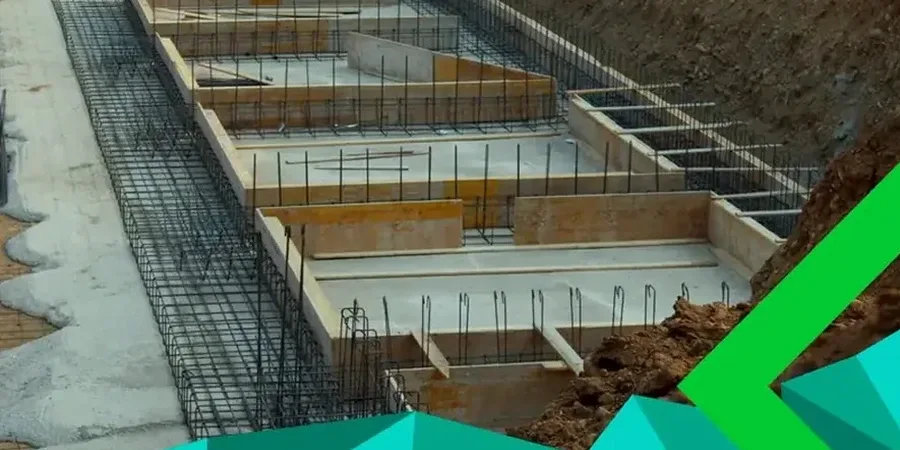
The South Hill basalt plateau and the Spokane Valley aquifer basin demand fundamentally different foundation logic. On South Hill, weathered basalt lies within 3 to 5 feet of grade on many parcels, giving a false sense of simplicity until you hit a clay-filled trough where differential heave becomes the controlling factor. Down in the Valley, near the Spokane River, alluvial silts and loose gravels extend 30 feet or more before refusal, and the water table hovers within 8 feet of the surface through spring runoff months. We design shallow foundations that reconcile these contrasts: a strip footing on the Moran Prairie deals with expansive Palouse loess, while a mat foundation near the Garland District may be governed by liquefaction potential in the underlying sand lenses. The CPT test often reveals thin, compressible interbeds that standard borings miss, and we pair it with plate load testing when bearing capacity needs site-specific verification before structural design moves forward.
In Spokane’s glacial-lacustrine terrain, the difference between a successful shallow footing and a distress claim is often one compressible silt lens that wasn’t sampled.
How we work
Local ground factors
Spokane sits in Seismic Design Category C per ASCE 7-22, with peak ground accelerations around 0.25g at the 2,475-year return period. While not as severe as coastal Washington, the hazard combines with the region’s layered stratigraphy in a way that amplifies shallow foundation risk: loose saturated sands in the Spokane Valley and Hillyard corridor are susceptible to cyclic mobility, and the silt-dominated interbeds beneath many commercial pads lose strength rapidly when vibrated. A shallow footing that performs acceptably under static dead-plus-live load can punch through a liquefied lens during a moderate earthquake, producing differential settlement that distorts the superstructure beyond serviceability limits. We address this by running bearing-capacity reduction checks per the simplified procedure in ASCE 7-22 Section 12.13, and when residual strength parameters fall below threshold, we recommend ground improvement—vibrocompaction for granular profiles or stone columns where fines content exceeds 15 percent—before finalizing footing geometry. The cost of pre-treatment is negligible compared to post-earthquake foundation jacking in a commercial building.
Applicable standards
IBC 2021 (adopted by City of Spokane, Chapter 18), ASCE/SEI 7-22 Minimum Design Loads and Associated Criteria for Buildings and Other Structures, ASTM D1586 Standard Test Method for Standard Penetration Test (SPT) and Split-Barrel Sampling of Soils, ASTM D2487 Standard Practice for Classification of Soils for Engineering Purposes (Unified Soil Classification System), ASTM D1194 Standard Test Method for Bearing Capacity of Soil for Static Load and Spread Footings
Associated technical services
Bearing Capacity & Settlement Analysis
We calculate net allowable bearing pressure using both classical Terzaghi-Meyerhof methods and finite-element settlement models calibrated to site-specific SPT/CPT data. Each report includes immediate settlement, consolidation settlement (where clays are present), and long-term creep estimates for the design life of the structure, formatted for direct use by the structural engineer of record.
Subgrade Improvement & Foundation Optimization
When native soils don’t meet the required bearing pressure or total settlement criteria, we design replacement strategies—compacted granular fill, geogrid-reinforced layers, or moisture-conditioned subgrade—rather than defaulting to deep foundations. The deliverable includes lift thicknesses, compaction specifications per ASTM D1557, and field density testing protocols that the contractor can execute with local equipment.
Typical parameters
Quick answers
What is the typical cost range for a shallow foundation design package on a commercial lot in Spokane?
For a stand-alone commercial building on a standard city lot, the geotechnical investigation and shallow foundation design report typically falls between US$2,140 and US$3,350, depending on the number of borings required and whether laboratory consolidation or swell testing is needed. Sites with undocumented fill or high groundwater may require additional in-situ testing that extends the scope.
Does the City of Spokane require a geotechnical report for a single-family home foundation?
Spokane’s building department generally requires a soils report for new residential construction when the site is on slopes exceeding 15 percent, within mapped landslide hazard zones, or when the foundation will use an engineered slab-on-grade system. Even where not strictly required, we recommend at minimum a site reconnaissance and one test pit with laboratory classification to screen for the expansive Palouse silt that affects many neighborhoods, including the Five Mile Prairie area.
How deep do footings need to be in Spokane to avoid frost heave?
Spokane County enforces a minimum footing depth of 24 inches below finished grade for frost protection, per the current adopted IBC. However, in areas with expansive silt, we often specify 30 to 36 inches of embedment combined with a capillary break and positive drainage to decouple the footing from seasonal moisture fluctuations that drive differential heave.
Can you design a mat foundation that eliminates the need for deep piles on a marginal Spokane site?
In many cases, yes. A sufficiently stiff mat foundation distributes column loads over a large enough area to reduce bearing pressures below the threshold that would trigger deep foundations, provided the underlying compressible layers are thin and the total settlement remains within the structural engineer’s tolerance. We model the soil-structure interaction using modulus of subgrade reaction values derived from site-specific shear-wave velocity or plate-load data, and we check punching shear at column locations per ACI 318 to confirm the mat thickness is adequate.