Spokane sits at an elevation of 1,843 feet along the Spokane River, where the Missoula Floods deposited massive volumes of loose, silty sand that still shape construction risk today. When a planned warehouse expansion off East Sprague Avenue hit 18 feet of uncontrolled fill with SPT N-values below 4, standard over-excavation was ruled out because of adjacent rail spurs and a 48-inch storm drain. The solution involved a targeted vibrocompaction design program that densified the fill in place using a grid calibrated to reach 70% relative density, which brought the SPT blow counts above 15 and avoided a six-figure retaining wall rebuild. Across the Inland Northwest, loose alluvial deposits and glacial outwash demand more than a generic ground improvement spec—they need a layout that accounts for silt content, groundwater fluctuation, and seismic demand per the Spokane County amendments to the IBC. We combine site-specific CPT soundings with laboratory grain-size analysis to define the treatable envelope before the first vibroflot hits the ground.
In Spokane's flood-deposited silty sands, vibrocompaction stops working when fines exceed 15 percent—that threshold separates a successful densification grid from an expensive exercise in vibration.
How we work
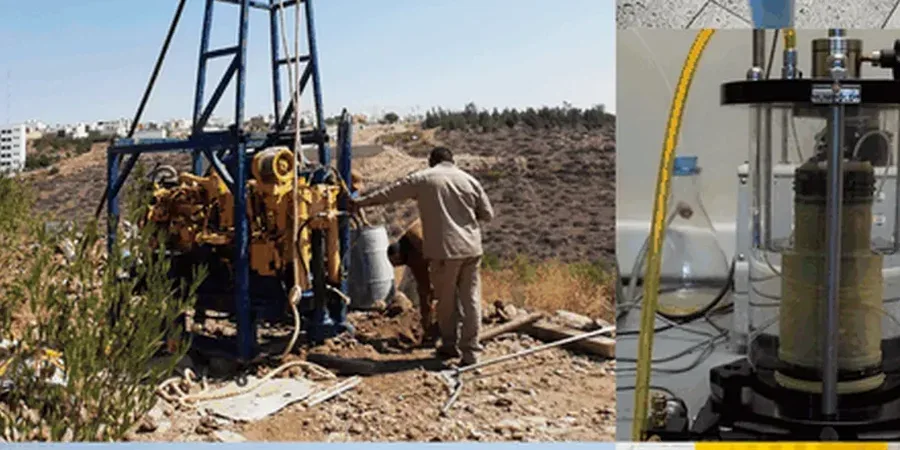
Local ground factors
ASCE 7-22 classifies much of Spokane County as Seismic Design Category C, which triggers mandatory liquefaction assessment for sites with loose sandy soils and groundwater within 15 meters of grade. The Spokane Valley Rathdrum Prairie Aquifer keeps the water table relatively shallow across a broad corridor, meaning that silty sands that appear dry during August excavation actually sit saturated during spring runoff conditions. A vibrocompaction design that ignores seasonal groundwater fluctuation can leave untreated lenses that generate excess pore pressure during the design earthquake, producing differential settlement that tears apart slab-on-grade floors and underground utilities. The IBC further requires that ground improvement performance be verified through post-treatment in-situ testing, not just energy-based correlations from the rig instrumentation. We document the entire process with before-and-after CPT pairs at each treatment point, and for critical structures we add cross-hole shear wave velocity measurements to confirm that the improved ground meets the stiffness assumptions used in the structural engineer's foundation model.
Applicable standards
ASCE 7-22 Minimum Design Loads for Buildings and Other Structures, IBC 2021 Chapter 18: Soils and Foundations, ASTM D1586 Standard Test Method for SPT and Split-Barrel Sampling, ASTM D2487 Standard Practice for Classification of Soils
Associated technical services
Treatability Assessment
Laboratory grain-size analysis and fines content determination to confirm whether the site soils fall within the compactable range before committing to field mobilization.
Trial Program Design
Layout of a test section with specified vibroflot type, grid geometry, dwell time, and verification testing protocol to calibrate production parameters.
Production Grid Layout
Stamped design drawings showing treatment point coordinates, sequencing, depth targets, and acceptance criteria tied to post-treatment CPT or SPT results.
QA/QC Verification
Independent post-densification testing and reporting to confirm that the improved ground satisfies the IBC performance requirements and the project specifications.
Typical parameters
Quick answers
What does a vibrocompaction design cost in Spokane?
For typical commercial projects in the Spokane area, vibrocompaction design fees range from US$1,510 for a small treatability study with one CPT profile to approximately US$5,090 for a full design package that includes trial program supervision, production grid layout, and post-treatment verification reporting. The final cost depends on site size, number of treatment zones, and whether hybrid methods like stone columns are integrated. We provide a fixed-fee proposal after reviewing the geotechnical data and visiting the site.
How deep can vibrocompaction effectively densify the ground in the Spokane Valley?
With electric vibroflot equipment, we routinely achieve effective densification to depths of 25 to 30 meters, which covers the liquefiable zones encountered in most Spokane Valley alluvial deposits. The Rathdrum Prairie outwash typically places loose sands within the upper 15 to 20 meters, so the treatment envelope is well within equipment capability. Deeper targets require larger horsepower units and closer spacing, which we evaluate during the treatability phase.
Do you need a building permit variance for vibrocompaction in Spokane County?
Vibrocompaction itself does not require a separate permit variance, but the ground improvement design must be submitted as part of the foundation permit package and must demonstrate compliance with IBC Chapter 18. The Spokane County Building and Planning Department reviews the geotechnical report, including the pre- and post-treatment testing data, to confirm that the improved ground meets the bearing capacity and settlement criteria assumed in the structural design. More info.